From PVC window profiles to aluminium components for future industries: Schirmer Maschinen GmbH is expanding the reach of its through-feed fab centres beyond its traditional core markets. What began in 1979 with profile processing for windows and entrance doors has developed into cross-industry technology for demanding aluminium and steel applications. Today, Managing Director Ludger Martinschledde explains why automotive, aviation, railway and other sectors are moving into focus — and why Schirmer sees quality, speed and flexibility as the decisive arguments for this next step.
Mr Martinschledde, Schirmer traditionally comes from window manufacturing, primarily from the field of PVC profile processing. Today, PVC and aluminium account for roughly equal shares of revenue. How did this development come about?
We were able to apply our expertise in PVC profile processing to the requirements of aluminium profile processing. Schirmer has also been developing and supplying aluminium machines for many years, particularly for window and façade manufacturing and shading technology. In recent years, however, we have fundamentally revised our modular system for aluminium machines and continue to develop it further. In addition to extremely rigid and precise mechanics, we consistently rely on servo-driven NC functions. This allows us to achieve outstanding machining quality — in terms of precision, speed and output — as well as a very high degree of flexibility when handling different profile geometries. We are clearly focused on the premium segment.
Where do you see the potential of aluminium, and what do you believe the material can achieve in the future?
Aluminium plays a key role in the green transformation and in the megatrends of lightweight construction, electromobility and recyclable construction. The combination of minimal weight, versatility, extreme durability and infinite recyclability without any loss of quality gives the material enormous potential in future key industries.
Where does Schirmer see application areas for its aluminium machining centres beyond windows, doors and façades?
Schirmer through-feed fab centres are suitable for any industry in which technically demanding aluminium — or steel — profiles have to be machined precisely, quickly and in a high degree of variety. Examples include spaceframe structures and battery carriers in vehicle manufacturing, stringers and intermediate decks in aircraft production, and components for railway carriage construction. We often summarise these fields as automotive, aviation and railway, but the potential goes far beyond that. We also serve processors of construction profiles, for example in mechanical engineering, interior design, furniture manufacturing and many other sectors.
How can the technology, which Schirmer has developed in its core industry be transferred to other industries?
The technology has already proven itself on the material. That means that even if we are not yet serving all of these new industries today, we have the technical basis to do so — not least because the window and façade industry is itself highly demanding and characterised by a broad variety of components. We configure machine concepts from a modular system of largely standardised process modules, tailored to each customer’s product and production requirements. This enables us to scale solutions precisely for different applications and support very high levels of automation. This is what distinguishes Schirmer’s mechanical engineering from other companies in the industry: Schirmer is neither a special-purpose machine builder nor a series manufacturer. We are a solution provider — across industries.
Which arguments does Schirmer use to meet the special quality requirements of the automotive and aerospace industries?
Our highly automated through-feed fab centres already achieve a level of precision that comes very close to that of machine tools. One way in which we differ, for example, is that we position based on the motor encoder rather than on the external scale of a machining axis. Intelligent solutions such as our clamping concept and temperature compensation provide the process stability required for series production in these industries. This already enables us to meet customer requirements in the form of specific machine capability certificates for tight tolerances. So we combine precision with the corresponding degree of automation and a very high level of flexibility for a wide range of customer products.
With regard to the quality management requirements of these specialised industries, we are well equipped thanks to our internal company processes. Certification, for example according to ISO 9001, has hardly been required in our core industry so far, but we have nevertheless introduced the necessary company processes. Certification is pending.
Are there already customers from industries that are new for Schirmer? How was Schirmer able to meet their specific customer requirements?
Yes, there are. Bosch Rexroth, a manufacturer of construction profiles, complemented Schirmer’s customer portfolio; for this customer, we were able to provide machine capability certificates for very high precision requirements. For AluTeam Fahrzeugtechnik and Cheval Liberté / Debon, companies active in commercial vehicle and trailer manufacturing, we combined high flexibility for a large number of demanding profile cross-sections with high precision requirements for a wide range of machining processes. Elaut, a developer and manufacturer of gripping devices and coin pushers for slot machines, brought Schirmer high precision requirements for a wide variety of profile cross-sections, which we were able to implement accordingly.
Which arguments help Schirmer win new customers? How does the customer benefit from working with Schirmer?
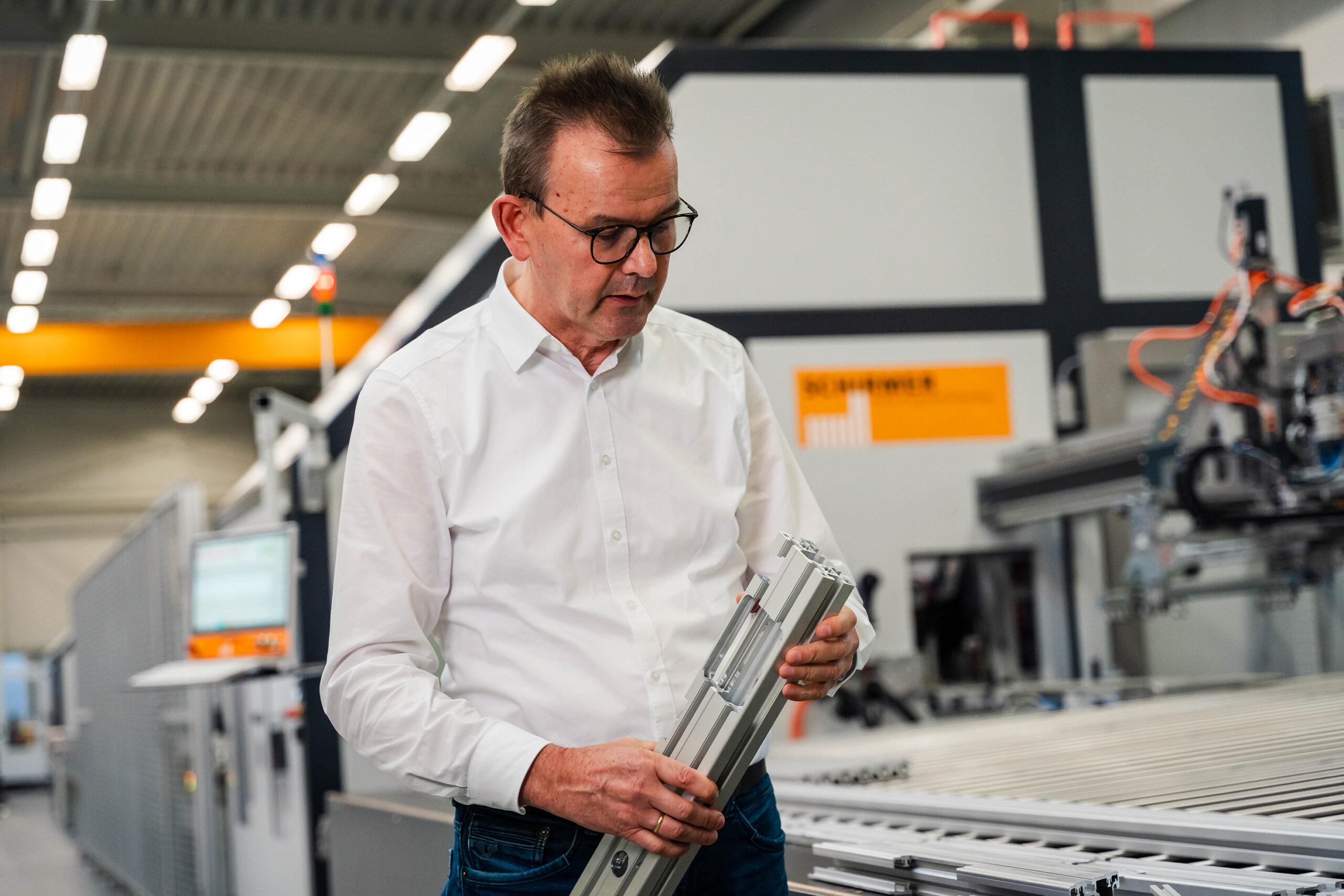
Schirmer customers benefit from a combination of quality, speed and flexibility. Very rigid, low-vibration and profile-specific clamping without manual retooling ensures high machining quality. High feed rates are supported by motion synchronisation, parallel machining operations and minimal tool-change times, increasing output. The strongest argument, however, is flexibility across the component spectrum. Even today, we can clamp profiles that do not yet exist. This shortens product launches, accelerates responses to market changes and provides investment security.
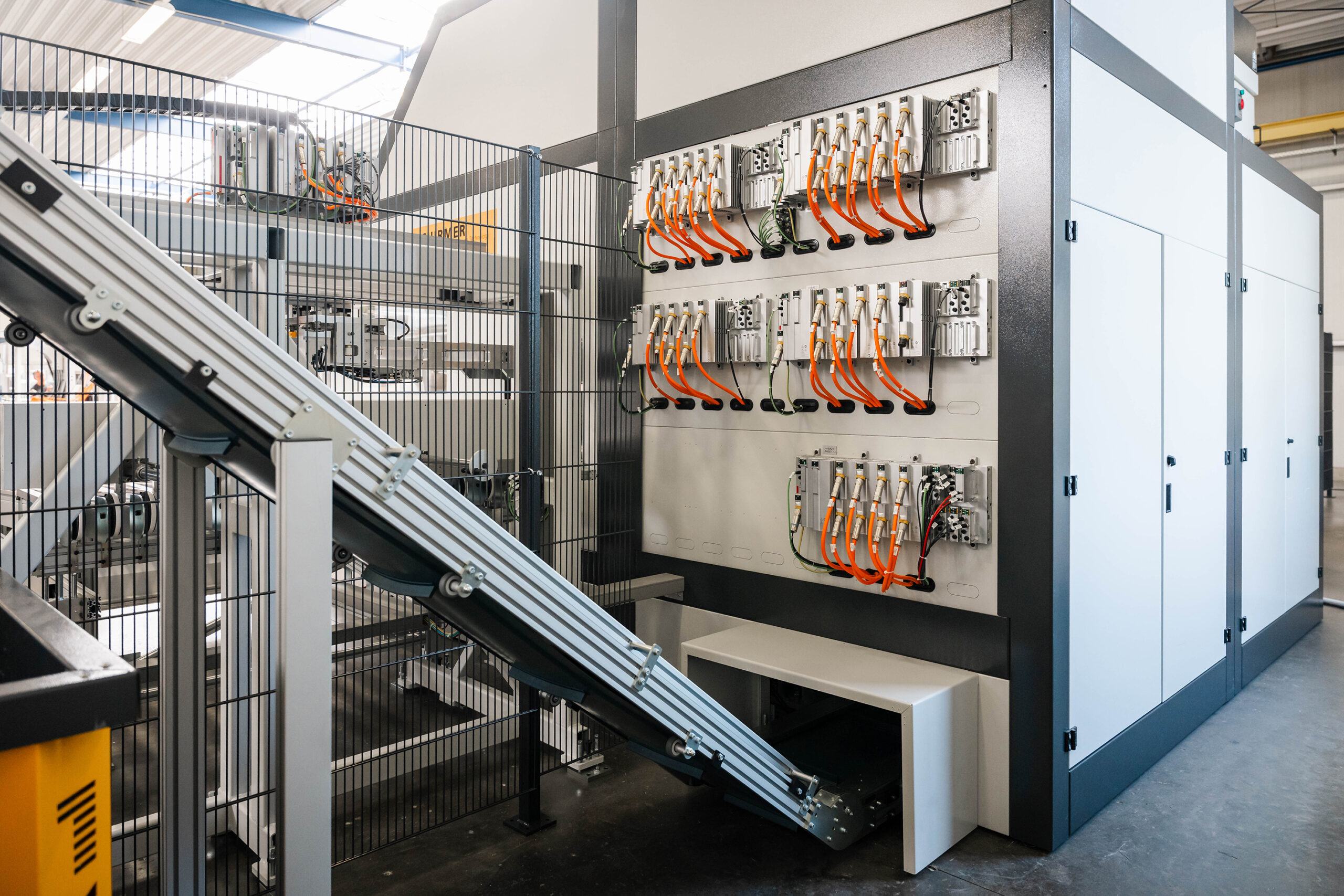
Thanks to long autonomous operating times, our systems can also help our customers counter the shortage of skilled labour. Last but not least, we supply all our machining centres with Beckhoff’s modular and pluggable control concept without a control cabinet, “MX-System”. Customers benefit from space savings in the machine layout, better visibility of processes during production, and advantages in diagnostics and maintenance. UL and CSA standards are also covered; they certify the safety of electrical products in North America (USA/Canada).
What does Schirmer hope to achieve with this year’s appearance at ALUMINIUM in Düsseldorf?
Our goal is to exchange ideas with customers from a wide range of industries and discuss specific applications and solutions with them. Our experience shows that visitors come to us with very concrete tasks. We want to solve these tasks and demonstrate that we are the right partner for machining any aluminium profiles because our machine concepts work independently of the product.
Ludger Martinschledde has been Managing Director of Schirmer Maschinen GmbH in Verl since 2020. The mechanical engineer began his professional career as a designer at Claas Fertigungstechnik GmbH in Beelen. Martinschledde accompanied the company, which later became part of Aumann AG, in management positions first in project management and assembly technology, and later in executive management and on the Management Board. In 2019, he moved to Schirmer.
Images in high resolution
Please, click on the thumbnail for pictures in high resolution format.
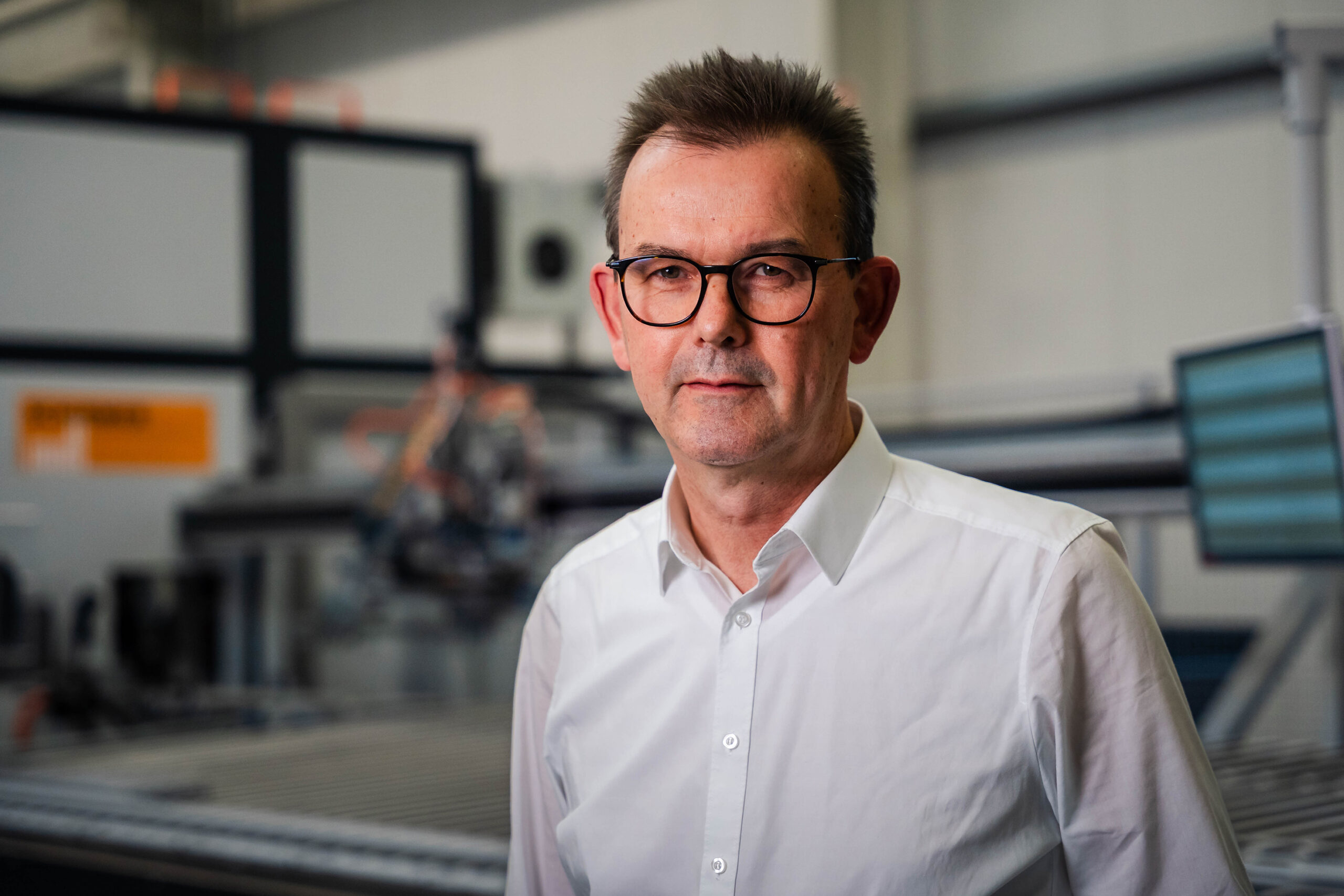 Caption 1: “Schirmer customers benefit from a combination of quality, speed and flexibility,” says Ludger Martinschledde, Managing Director of Schirmer Maschinen GmbH in Verl. Photos: Schirmer Maschinen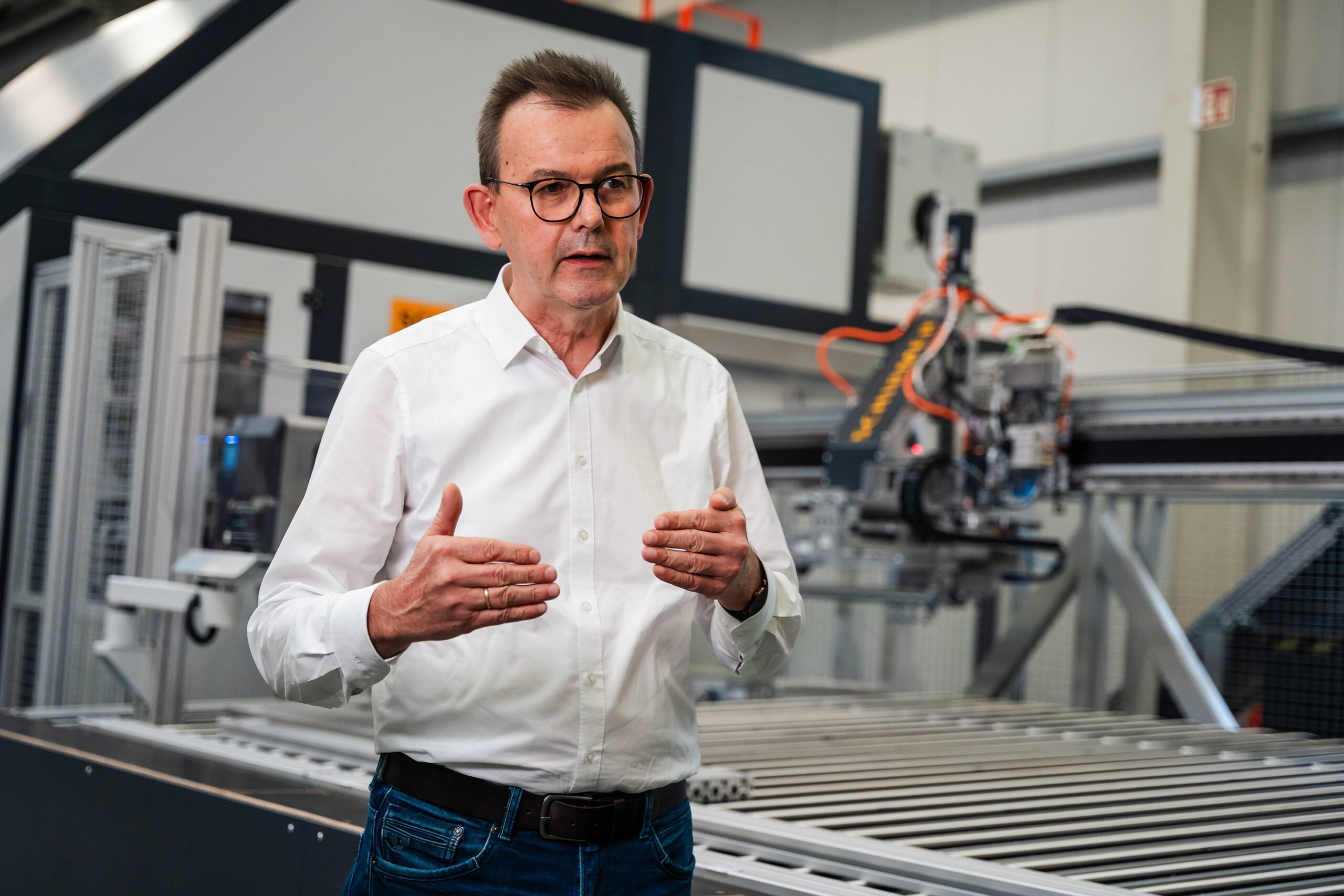
 Caption 2: One argument in favour of Schirmer systems: flexibility in the component spectrum. Schirmer can already clamp profiles that do not yet exist. This offers customers investment security. Photos: Schirmer Maschinen
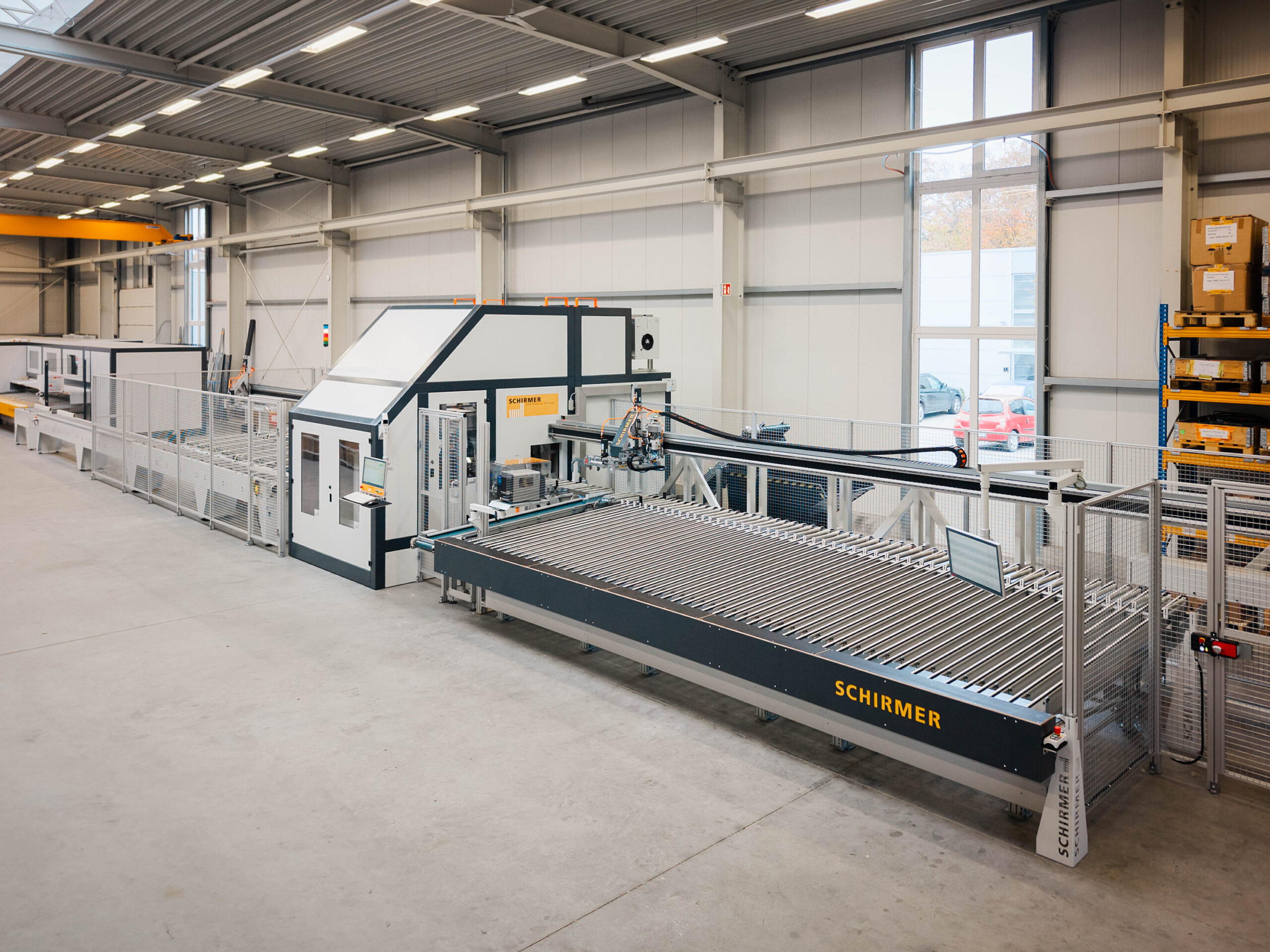 Caption 3: A customer-specific though-feed fab centre configured for Bosch Rexroth for processing aluminium construction profiles. Photos: Schirmer Maschinen
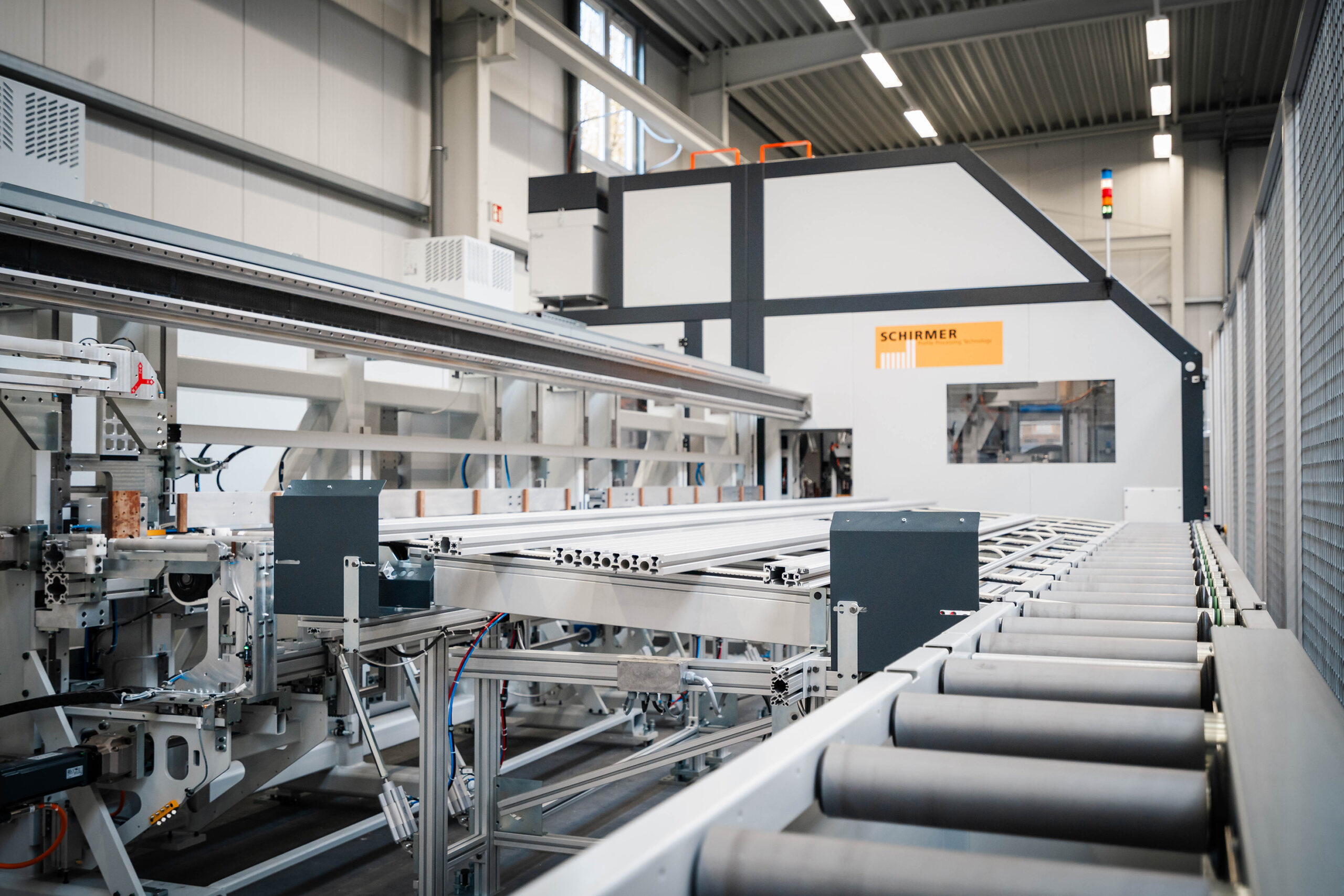 3a: At Bosch Rexroth, a robot handles the infeed without operator intervention.
 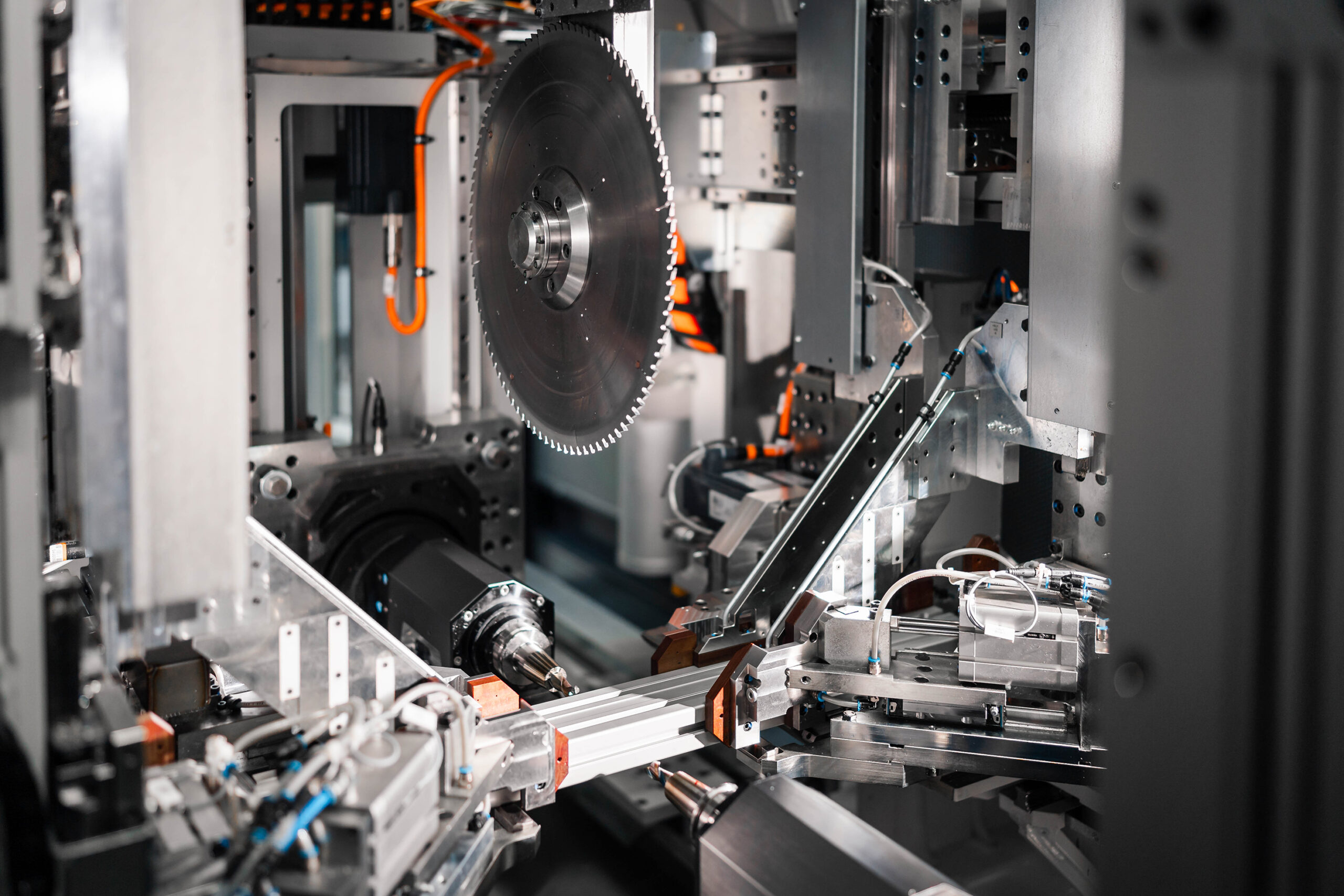 3b: The special feature: one space-saving module contains two opposing 5-axis milling heads that work simultaneously, each with its own tool changer, as well as a saw from above. The profiles are clamped only once for the associated machining operations. Each machining spindle is equipped with an automatic 20-position tool changer.
 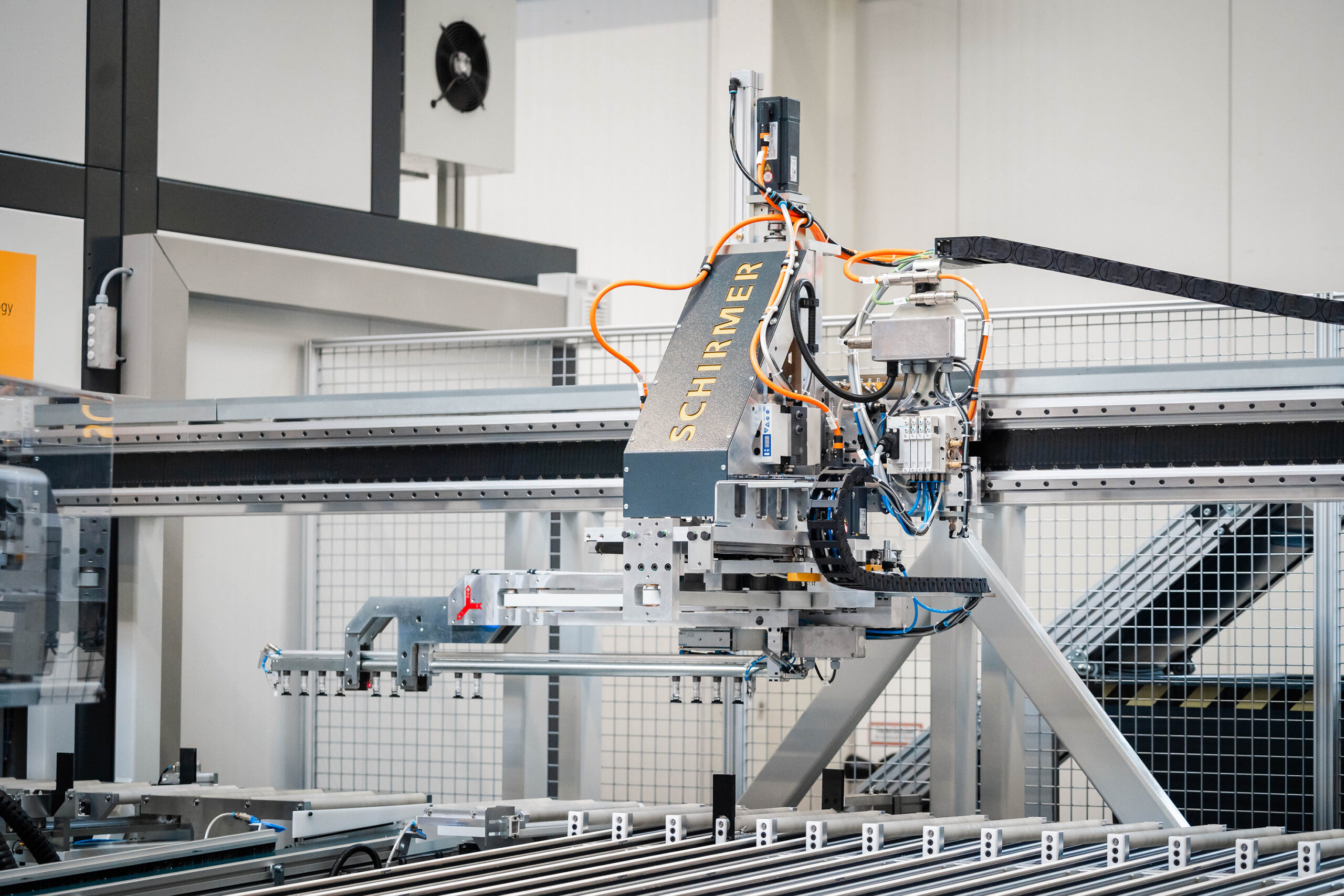 3c: At the outfeed, a three-sided label printer is ready for use. A vacuum suction unit handles profiles that do not offer parallel gripping surfaces.
 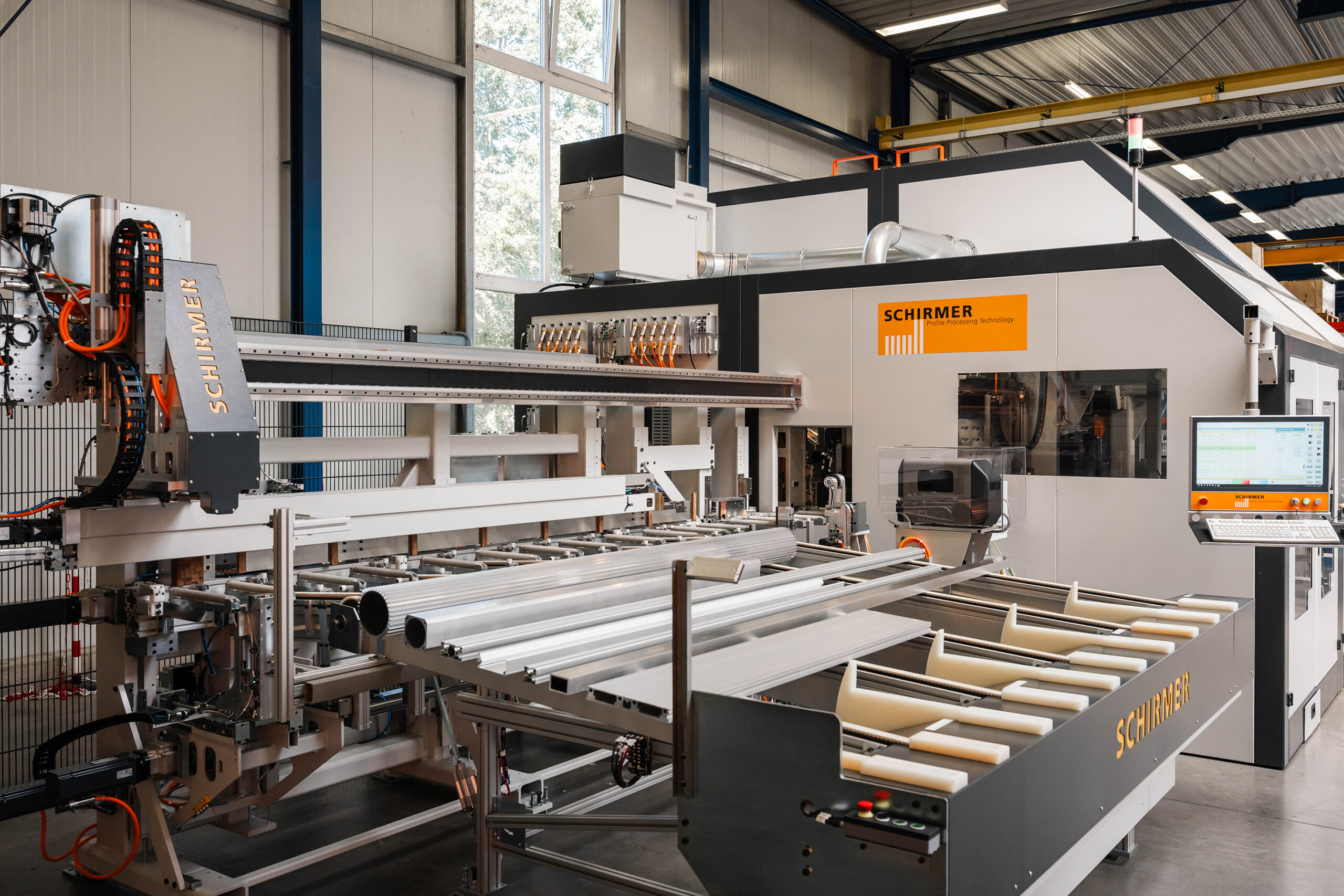 Caption 4: Schirmer will be showcasing this aluminium through-feed fab centre at the ALUMINIUM trade fair in Düsseldorf this October. Profiles with various geometries are waiting at the feed-in point. The orange cabling is part of Beckhoff’s ‘MX-Automation’ control concept, which does not require a control cabinet. Photos: Schirmer Maschinen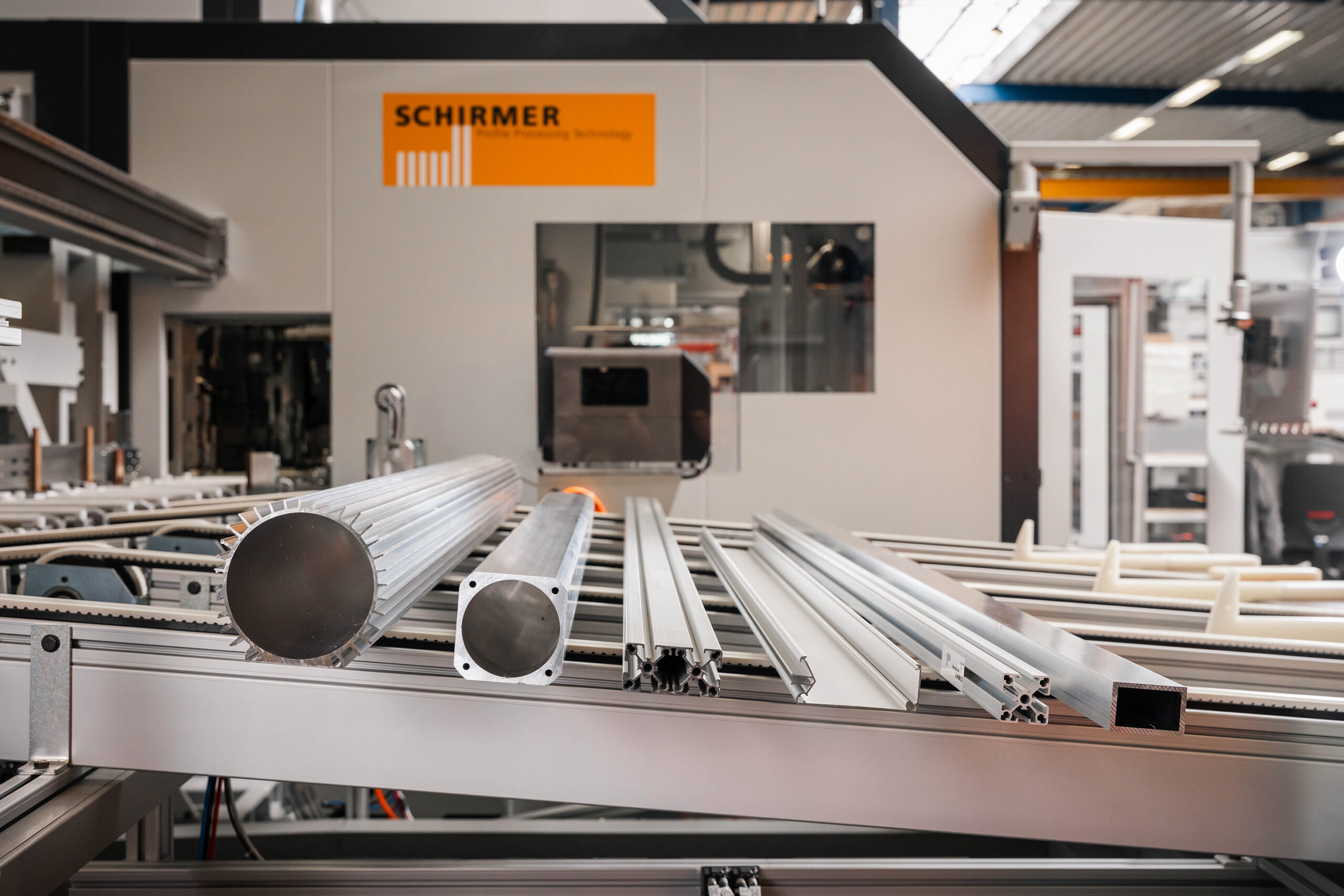
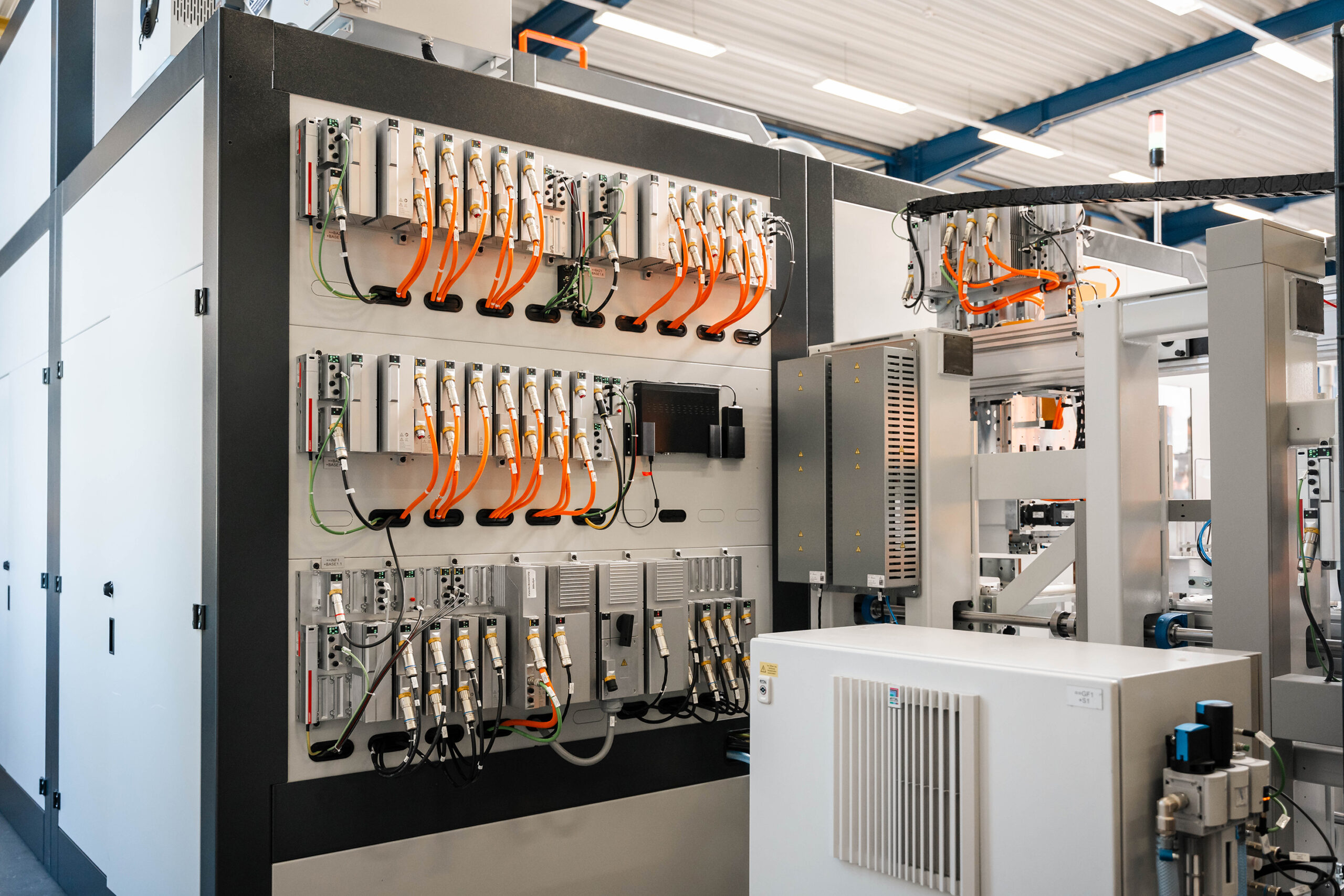 Caption 5: Schirmer supplies all its machining centres with Beckhoff’s modular, pluggable, control cabinet-free ‘MX-Automation’ control concept. Customers benefit from space savings in the machine layout, better visibility of processes during production, and advantages in diagnostics and maintenance. Photos: Schirmer Maschinen